The Quiet Beauty of an Oxeye Daisy
🌼 Study in Form, Texture, and Natural Design
There’s something timeless about the simple oxeye daisy. A beautiful wildflower which is often overlooked along roadsides and verges, it carries a quiet elegance — pure white rays framing a golden centre like a small sun held in a crown of petals. Plant a few in your garden and every year and they will reward you with a stunning display.
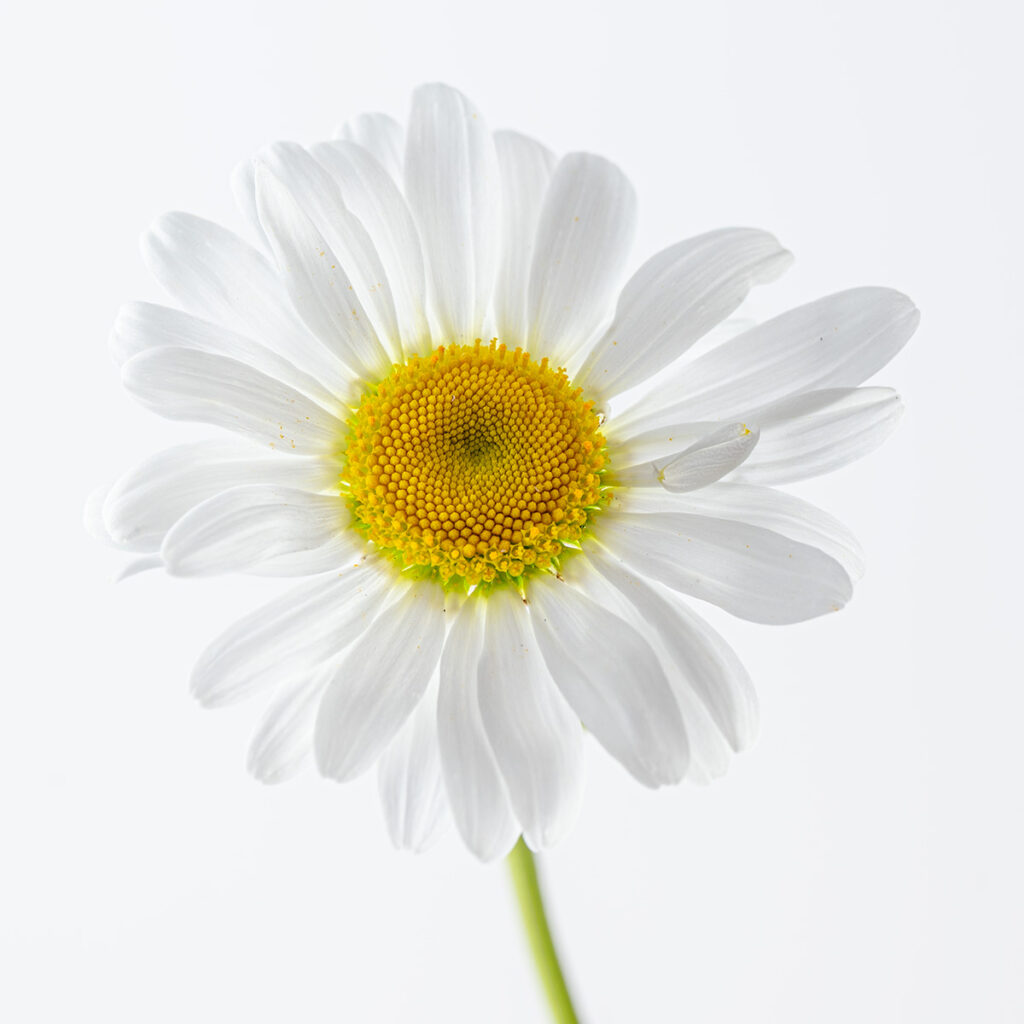
Full-face portrait of the oxeye daisy: radial symmetry and gentle tilt.
The full bloom shows a classic structure: white ray florets spreading outward from a bright yellow disc, each individual floret tightly packed in a Fibonacci spiral — a natural design both mathematically precise and visually soothing. The daisy’s simple appearance belies its botanical complexity.
Zooming In: Where Art Meets Science
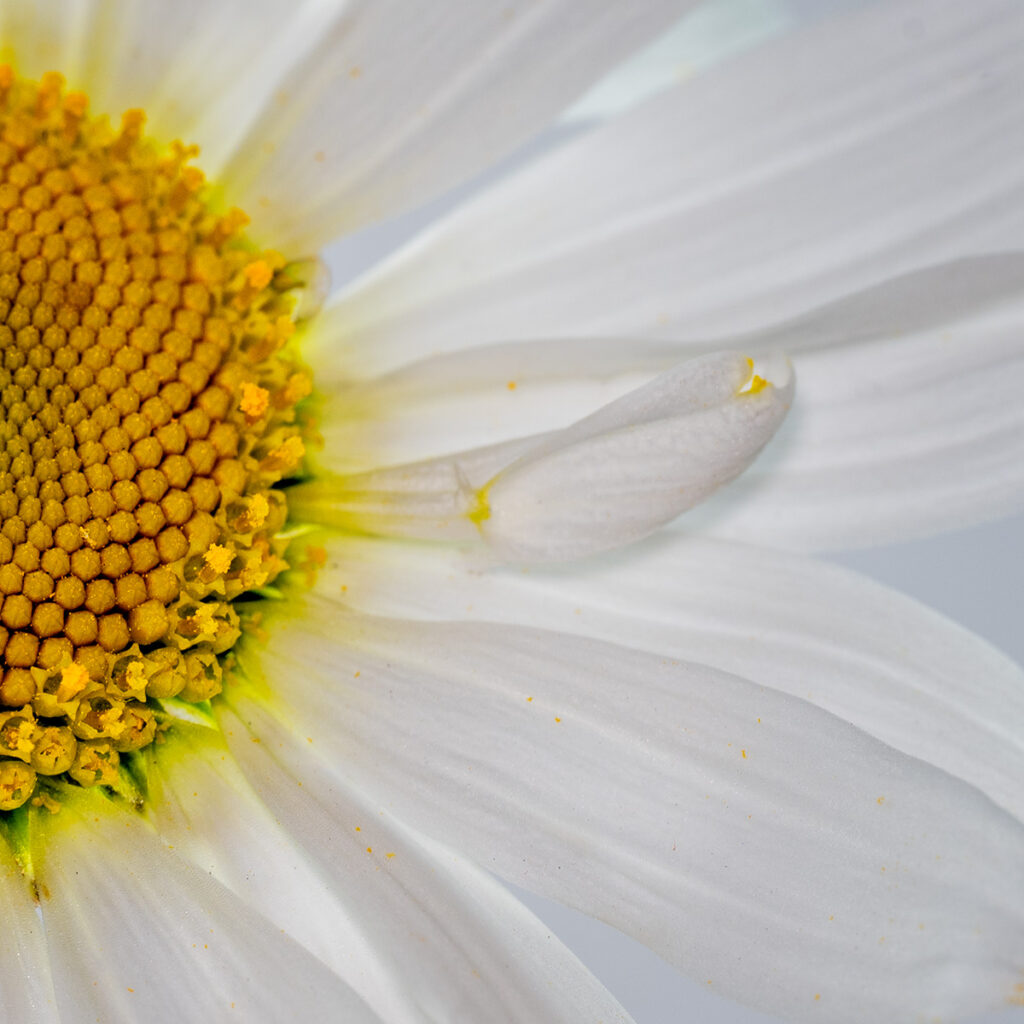
A macro view: tiny florets form a sunburst of texture, dusted with pollen.
In a closer view, we see the tiny disc florets—each one a flower in itself. Together, they create the textured core that hosts the daisy’s reproductive structures. The pollen grains scattered lightly across the white petals add a moment of imperfection, reminding us of this bloom’s role not only as a visual object but a living, pollinator-driven organism.
Observations from the Lens
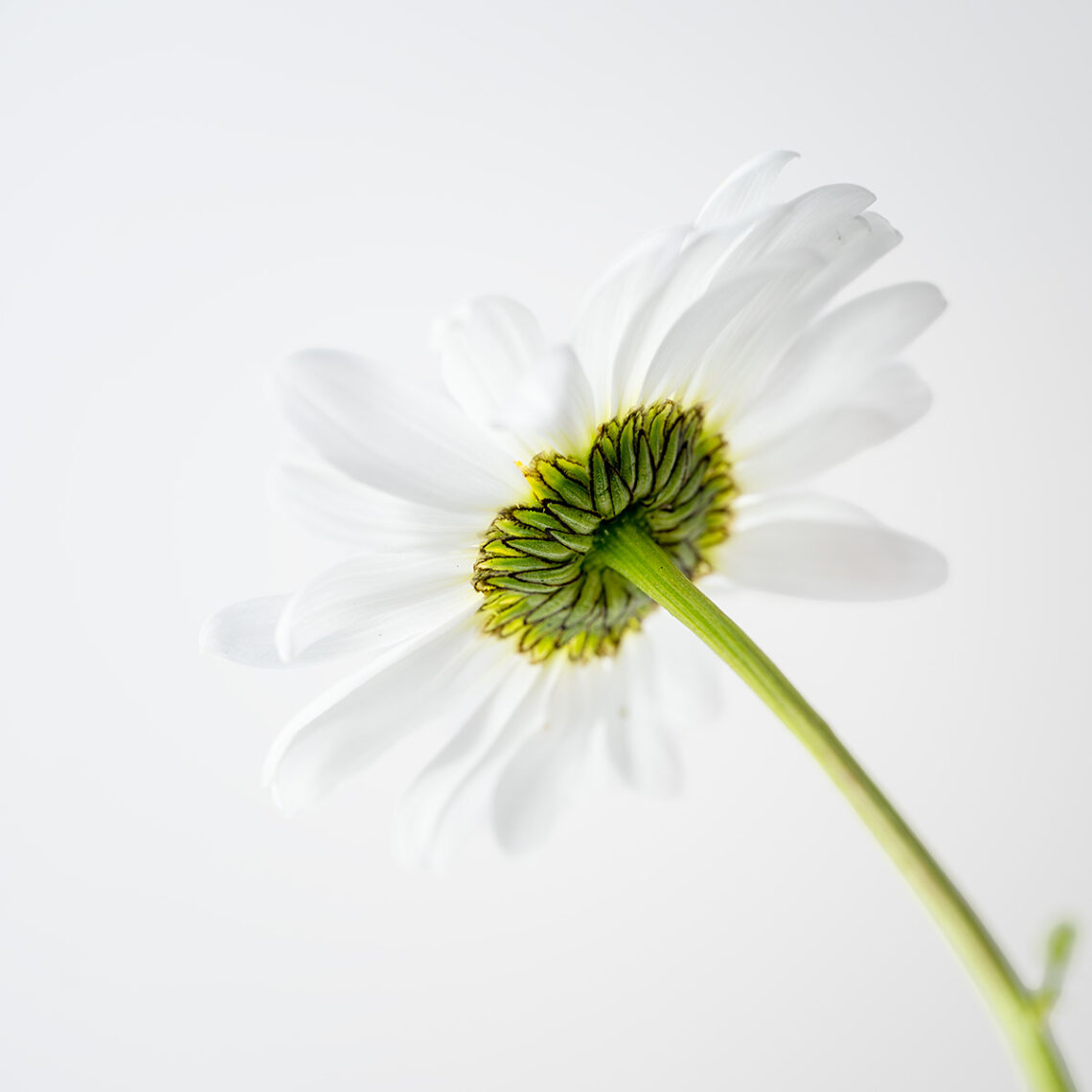
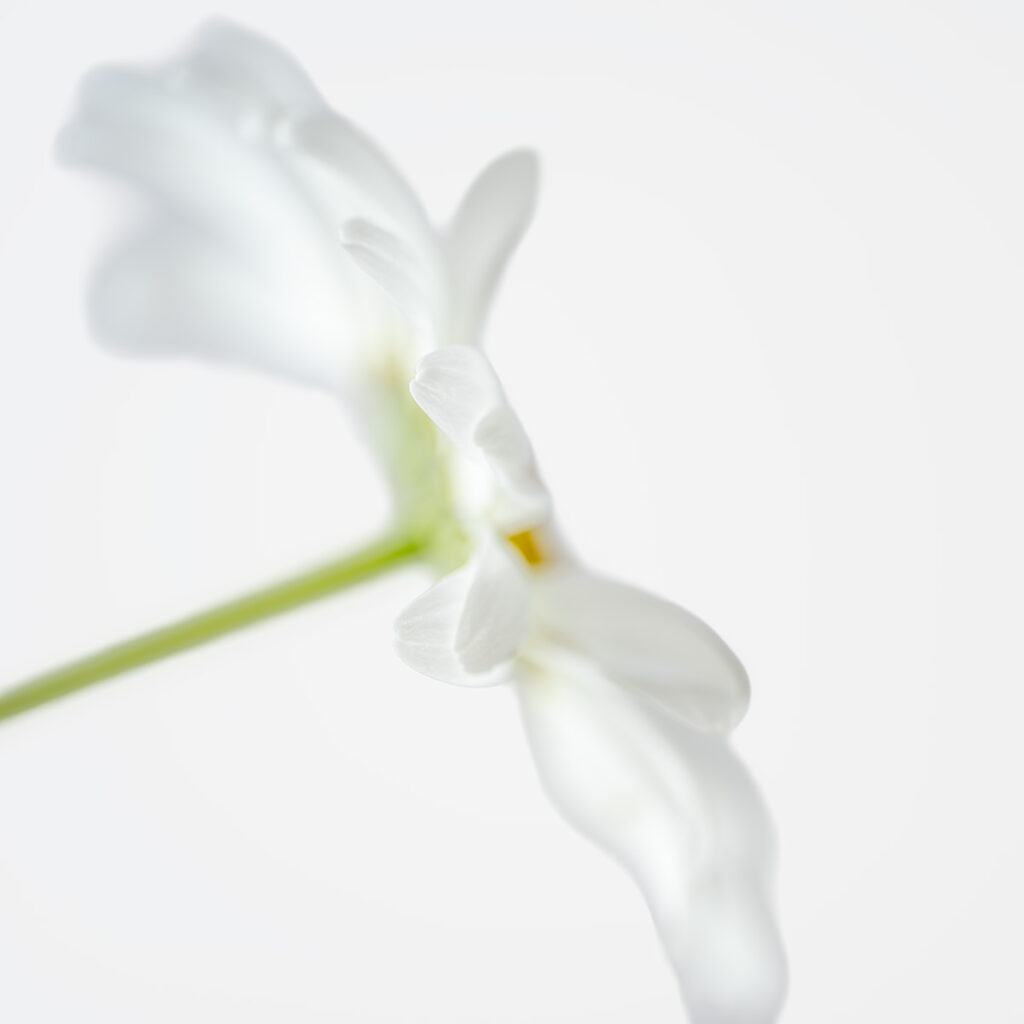
As I moved around the flower, shooting from multiple angles, I was struck by how its character changed with the light and perspective. From straight-on, it’s all about symmetry and balance. From the side, a sense of movement and grace emerges — the slight tilt of the stem, the curve of the petals.
you can see these and more photos of the same flower on my Instagram page .
Notes for the Curious
- Common Name: Oxeye Daisy
- Botanical Name: Leucanthemum vulgare
- Season: Late spring through midsummer
- Habitat: Meadows, verges, wildflower-rich soils
- Symbolism: Innocence, purity, and resilience
Thanks for reading,
Anne