The Green Man: A Leafy Mystery of British Folklore
Hidden in the stonework of old churches, carved into pub signs, or peering out from garden ornaments, the Green Man is one of the most enduring and mysterious figures in British folklore. Recognisable by his face surrounded—or even made entirely—of leaves, vines, or foliage, the Green Man is often seen as a symbol of rebirth, nature, and the changing seasons.
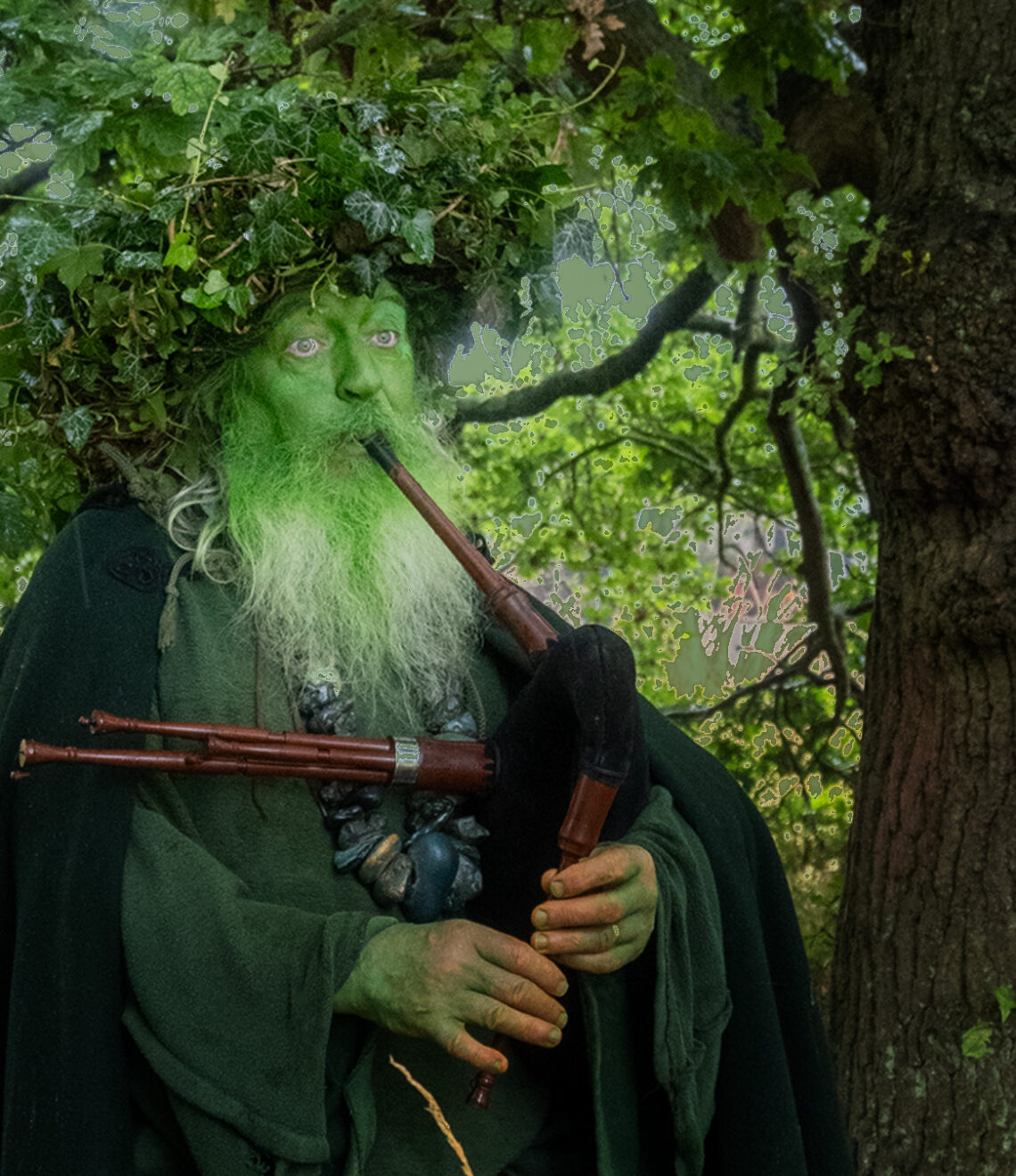
I have long been fascinated by the green man and thought him a figure of myth, mystery and magic. Then on Sunday I met him in real life, stood beneath an ancient oak tree and playing his pipes. Naturally I asked very nicely before taking these photos and he was happy to oblige. But who is he, and where did he come from?

The origins of the Green Man are ancient and elusive. While we now associate him with medieval British churches and folklore, similar leafy faces have appeared across cultures for thousands of years. Early versions have been found in Roman architecture and even in temples in India and the Middle East. However, the Green Man as we know him gained popularity in Britain during the Middle Ages, particularly in church carvings and sacred buildings. It may seem strange that such a pagan-looking figure would be found in Christian places of worship, but he likely represented the idea of resurrection and eternal life—concepts shared by both pagan and Christian traditions.
During the 19th and early 20th centuries, the Green Man faded into obscurity. It wasn’t until the 1930s that he was given his modern name. The term “Green Man” was popularised by Lady Raglan, who wrote about him in a 1939 article. She linked the figure to pre-Christian fertility gods and seasonal festivals like May Day. Since then, the Green Man has been widely embraced as a symbol of Britain’s deep-rooted connection to the land and its seasonal cycles.
In folklore, the Green Man is often associated with nature spirits, woodland deities, or the old gods of the forest. He is a wild, untamed figure—sometimes kind, sometimes vengeful—who represents the raw power of nature. In this sense, he shares much with other mythological figures like the Celtic god Cernunnos or the forest-dwelling Herne the Hunter. These figures remind us that nature is both beautiful and fierce, capable of renewal and destruction.

In modern Britain, the Green Man has enjoyed a revival. He appears at folk festivals, particularly those celebrating spring and summer. Green Man masks and costumes are worn in May Day parades and Beltane rituals, and his leafy face has become a popular motif for artists, sculptors, and gardeners alike. He even lends his name to one of Wales’ best-known music festivals.
Ultimately, the Green Man is a symbol of mystery, transformation, and the deep ties between people and the natural world. Whether seen as a pagan god, a Christian allegory, or simply a folkloric reminder of our woodland past, he speaks to something timeless in the human imagination. In a world that often feels disconnected from nature, the Green Man invites us to remember where we come from—and where we must return.
I would love to hear your tales of meeting the green man


You May Also Like